Waste Management is a pressing global challenge that affects both businesses & the environment. Process waste, specifically, refers to any waste generated during production or service delivery that does not add value to the final product or service.
In this blog by A3 TechnocraftsPvt Ltd we will explore the concept of a process waste audit, its significance in identifying inefficiencies and how A3 Technocrafts by removing inefficiency in the process is paving the way for a more sustainable and resource-efficient future.
Understanding Process Waste Audit:
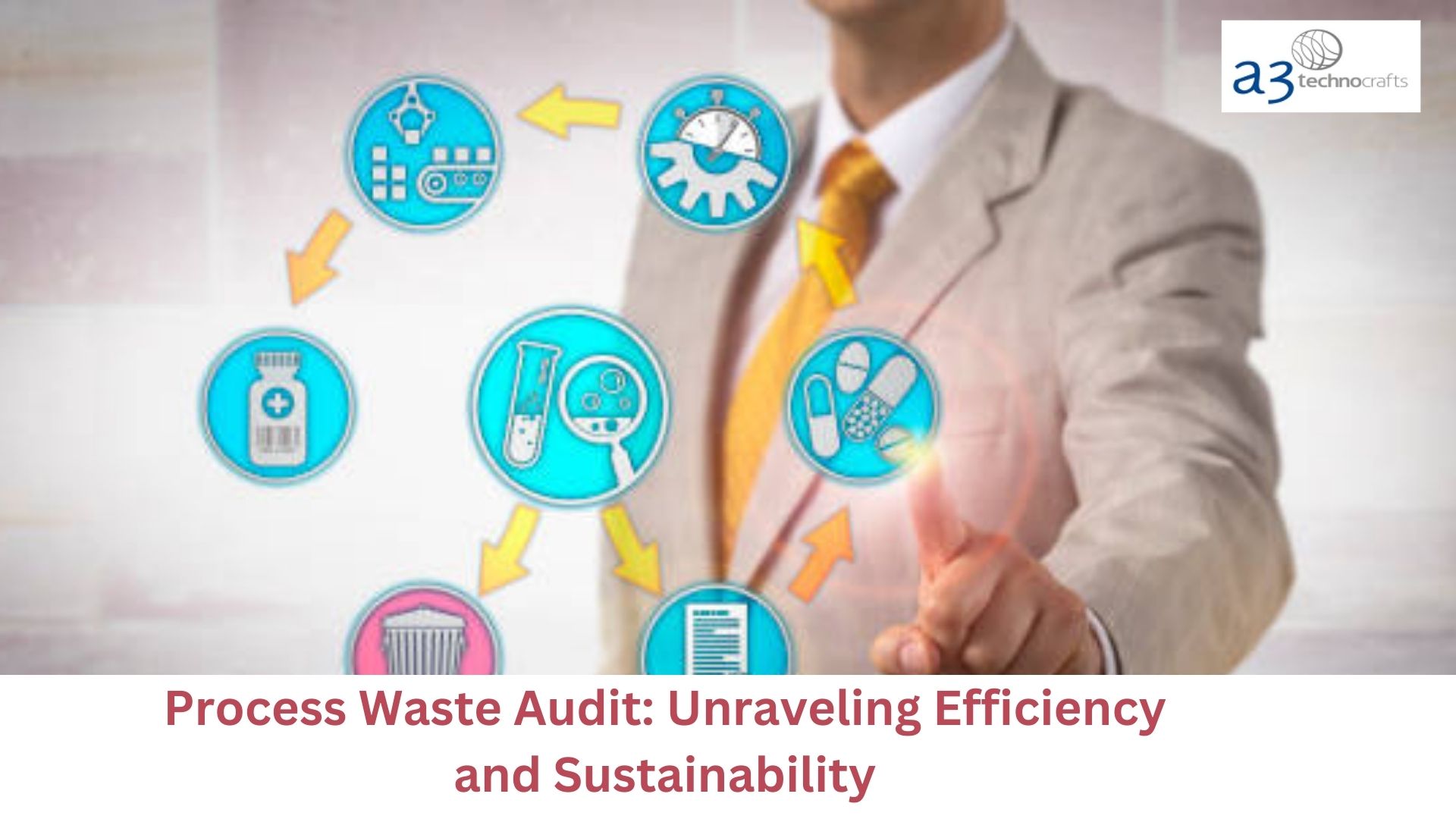
A process waste audit is a systematic assessment of a company’s operations to identify and quantify wasteful practices. It involves analyzing the entire production or service delivery chain, from input acquisition to final output, to uncover areas where resources are being underutilized or wasted. The primary goal of a Process Waste Audit is to pinpoint inefficiencies and develop strategies to minimize or eliminate waste.

The A3 Technocrafts’ Role:
At the forefront of waste management innovation, A3 Technocrafts plays a pivotal role in assisting businesses to tackle the challenge of process waste. With a commitment to sustainability & efficiency, A3 Technocrafts provides cutting-edge solutions that empower businesses to transform their waste management practices.
Key Steps in Conducting a Process Waste Audit:
Following are the steps involved in the process:
1. Data Collection:
The first step in a waste audit process is data collection. Gathering comprehensive data on input consumption, production processes and output generation is crucial for accurate analysis.
2. Waste Categorization:
Waste can be categorized into different types, such as Liquid waste, Solid waste, semi-liquid waste or more precisely as Hazardous or Non-Hazardous waste. Each category requires specific evaluation methods to identify its sources and impacts.
3. Waste Quantification:
Once the waste is categorized, the next step is to quantify the amount of waste generated in each category. This data will provide a clear picture of the scale of inefficiencies in the process.
4. Root Cause Analysis:
Identifying the root causes of waste is essential for developing effective solutions. Root cause analysis involves investigating why waste occurs and what factors contribute to its generation.
5. Solution Development:
Based on the findings of the audit, strategies and action plans are formulated to minimize or eliminate waste. These solutions may involve process redesign, technology implementation, employee training or supply chain optimization.

Benefits of Process Waste Audit:
1. Cost Reduction:
By identifying and eliminating wasteful practices, companies can significantly reduce production costs and enhance profitability.
2. Resource Efficiency:
Waste audit leads to better resource management, ensuring that valuable resources are used optimally, reducing the strain on natural resources.
3. Environmental Impact:
Minimizing waste translates to reduced environmental impact, including lower greenhouse gas emissions and reduced landfill burden.
4. Competitive Advantage:
Companies that embrace sustainability and efficiency through waste audits gain a competitive edge in the market, appealing to eco-conscious consumers.
5. Regulatory Compliance:
With increasing environmental regulations, waste audits help companies stay compliant and avoid potential fines or penalties.
Now, after you know what is Waste Audit, steps involved in this audit and its benefits, now let’s talk about Implementing a Waste Audit Methodology:
1. Set Clear Goals:
Define the objectives of the waste audit, whether it’s to reduce costs, improve sustainability or comply with regulations.
2. Engage Employees:
Involving employees from various departments ensures a comprehensive understanding of the processes and encourages ownership of waste reduction initiatives.
3. Adopt Technology:
Utilize software and digital tools to collect, manage and analyze data efficiently, making the waste audit process more accurate and streamlined.
4. Continual Improvement:
Waste audits should not be a one-time event. Companies should incorporate waste reduction as an ongoing process, constantly striving for improvement.
5. Collaborate with Experts:
Partnering with waste management experts or consultants can provide valuable insights and guidance to optimize the audit process and implement effective solutions.
In conclusion, Process Waste Audit plays a crucial role in promoting sustainability, resource efficiency and cost-effectiveness for businesses. By identifying and addressing inefficiencies, companies can pave the way for a more sustainable and environmentally responsible future. Embracing waste audit methodologies is not only beneficial for businesses but also for the well-being of the planet we call home.
Follow Us: