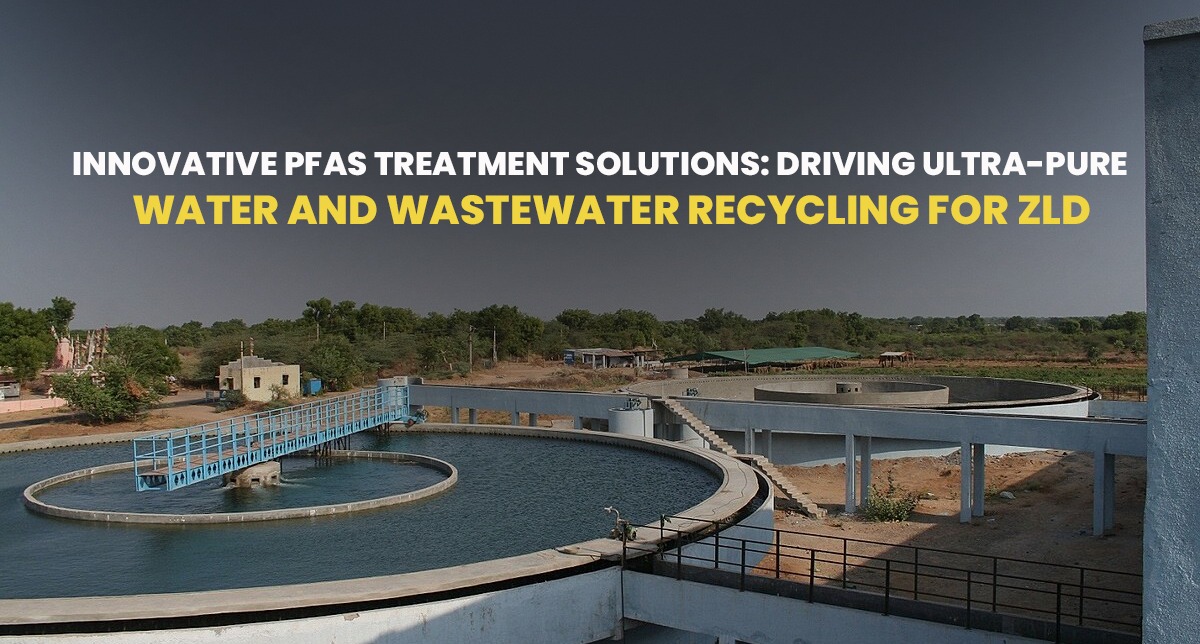
Innovative PFAS Treatment Solutions: Driving Ultra-Pure Water and Wastewater Recycling for ZLD

Per- and polyfluoroalkyl substances (PFAS) are perhaps the most difficult to treat contaminants in contemporary water management. Classified as “forever chemicals,” PFAS do not undergo natural degradation and, thus, carry health and environmental risks over the long term. With increasing regulatory burdens, PFAS contamination should be done in every way possible along with enabling sustainable water use. The ZLD solution from A3 Technocrafts offers a new-age solution with PFAS treatment along with ultra-pure water production and complete recycling of wastewater to meet Zero Liquid Discharge (ZLD) needs.

PFAS Challenges in Industrial Wastewater

PFAS are employed quite widely due to their chemical stability, hydrophobicity, and thermal stability in various industries like pharmaceuticals, electronics, and textiles. These same characteristics, however, render them very challenging to remove from wastewater. PFAS is not directly or well removed by traditional treatment processes, and it poses a treat of environmental degradation and violation of regulatory norms. Combining advanced PFAS treatment within a ZLD system is necessary — and this is where ZLD solution by A3 Technocrafts performs well.

Advanced PFAS Treatment Technologies by A3 Technocrafts

A3 Technocrafts’ ZLD solution provides numerous advanced technologies to treat PFAS:

  1. Adsorption & Ion Exchange: Specialist resins are employed in a effective manner through trapping the PFAS molecules.
  1. Advanced Oxidation Processes (AOPs): High-energy oxidation brokes down the PFAS chains into harmless constituents.
  1. Membrane Filtration: PFAS is demineralize with Nanofiltration and reverse osmosis making it apt for more ultra-pure water recovery.
  1. Thermal & Electrochemical Destruction: Focused PFAS residues are annihilated with high efficiency.

These technologies not only destroy PFAS but also integrate well into ZLD systems for maximum efficiency and compliance.

Connecting PFAS Treatment to Ultra-Pure Water and ZLD Compliance

Ultra-pure water is essential in product sectors where product quality and accuracy cannot be compromised. PFAS contamination jeopardizes these benchmarks. ZLD solution by A3 Technocrafts solves it  into production of ultra-pure water so that wastewater can be fully recycled by incorporating PFAS treatment. The dual process allows for compliance with more strict environmental standards while improving operation efficiency.

Benefits of A3 Technocrafts’ ZLD Solution

Implementing A3 Technocrafts’ ZLD solution has appropriate benfits :

  1. Regulatory Compliance: Complies with changing PFAS discharge regulations and ZLD requirements
  1. Water Reuse: Maximizes recycling to reduce freshwater by significant quantities.
  1. Operational Efficiency: Provides high-quality water for vital industrial processes.
  1. Environmental Responsibility: Eliminates harmful PFAS and promotes sustainability.

Conclusion

PFAS contamination is an alarming water management issue, but a surmountable one. Next-generation PFAS treatment technologies combined with ultra-pure water systems and ZLD solution by A3 Technocrafts provide a sustainable route ahead. This instinct solution enables industries to comply with environmental regulations, realize water recycling objectives, and provide cleaner, safer operation.

CTA

Learn how ZLD solution by A3 Technocrafts can revolutionize your wastewater management.

Reach out to us today at https://a3technocrafts.com/ to apply state-of-the-art PFAS treatment and realize complete water recycling.

FAQs

1. What is PFAS and why is it an issue?

PFAS are the prevailing “forever chemicals” which may have long-term health and environmental hazards.

2. How PFAS is removed by ZLD solution by A3 Technocrafts?

It employs state-of-the-art adsorption, oxidation, and membrane filtration for effective elimination.

3. Can ZLD solutions be applied to reduce freshwater use?

Yes — total wastewater recycling is possible with significantly lowering freshwater needs.

4. Is A3 Technocrafts ZLD solution regulatory compliant?

Yes — it meets strict PFAS discharge limits and ZLD regulatory compliance.
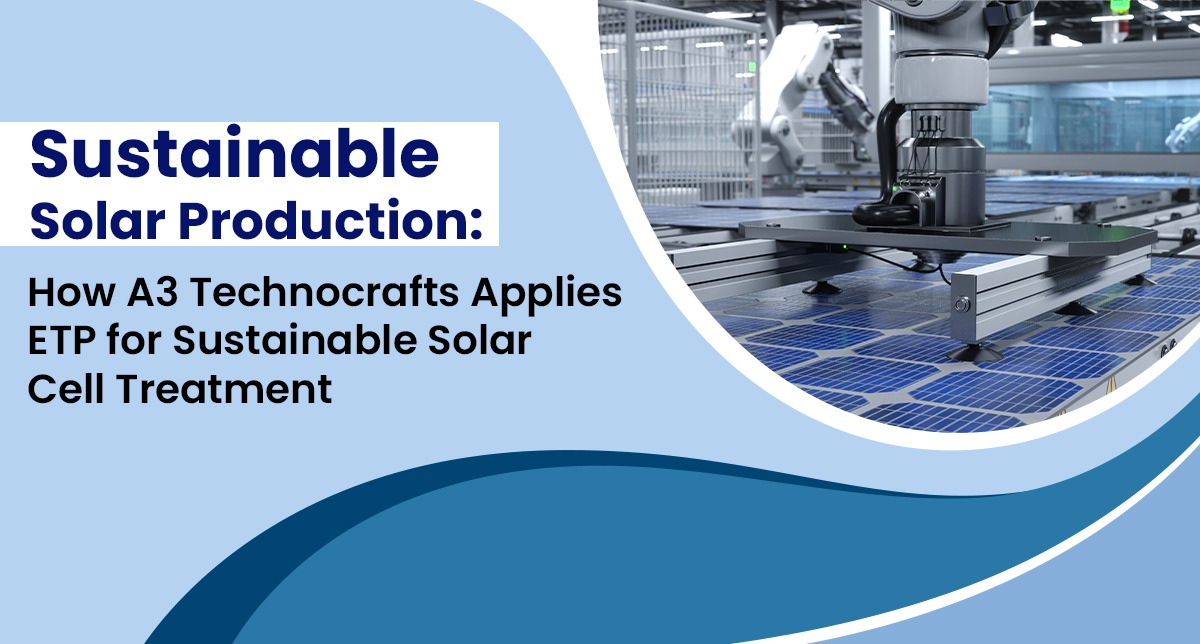
Sustainable Solar Production: How A3 Technocrafts Applies ETP for Sustainable Solar Cell Treatment

Introduction

With the world moving toward renewable energy, solar power has emerged as a pillar of sustainable development. In making solar cells, though, there are chemicals and water-based processes that can create hazardous wastewater. If these effluents are not treated, they have the potential to cause harm to the environment and compromise the very sustainability of solar energy.

To pass this test, A3 Technocrafts‘ use of ETP in solar cell treatment ensures that not only is clean energy produced but also produced sustainably. Their approach ensures that innovation supports sustainability, and they are substantiated as a green technology leader.

Why Solar Cell Production Requires ETP

The production of solar cell uses chemicals like etching, washing, and coating. Chemicals like acids, alkalis and solvents that produce wastewater with toxic residues are used in this process. Release of these effluents in untreated form can be harmful for environment.

This is the process where ETP by A3 Technocrafts steps in. An Effluent Treatment Plant processes industrial wastewater, removes toxic chemicals, and facilitates recycling or safe disposal of water. For solar cell production, this provides expansion in clean energy without costing the environment.

A3 Technocrafts’ Approach to ETP

The use of ETP by A3 Technocrafts shows their commitment towards green solar cell treatment. Their policy is founded on:

  1. Zero-Liquid Discharge (ZLD): Ensuring that no untreated wastewater is discharged outside the plant.
  1. Recycling Treated Water: the treated water can be reused in plant and minimizing freshwater intake.
  1. Compliance with Standards: Surpassing the environmental standards set by international organization.
  1. Advanced Treatment Methods: Utilizing physical, chemical, and biological treatment for maximum efficiency.

Through the incorporation of these practices, A3 Technocrafts makes solar cell manufacturing both efficient and eco-friendly.

How use ETP in Solar Cell Treatment is beneficial

  1. Environmental Protection: Protects the water bodies and land from degradation.
  1. Resource Efficiency: The use of recycling water and reducing freshwater usage.
  1. Regulatory Compliance: It complies regulation with pollution board norms.
  1. Sustainability Branding: Enhances the green image of manufacturers.

A3 Technocrafts’ adoption of ETP offers these benefits along with increased trust among stakeholders in the renewable energy industry.

A3 Technocrafts and Green Innovation

A3 Technocrafts’ implementation of ETP is a way of looking at the objective of sustainability through solar technology. also an extension of their wider objective to adopt sustainable solar technology practices. A3 Technocrafts aligns its policy with the International ESG standards to maintain the green innovation in manufacturing of solar cell.

Final Thoughts

The solar industry lead the way with sustainability. By embracing ETP solutions by A3 Technocrafts in the treatment of solar cells, manufacturers can ensure clean energy production is not damaging the environment. They are the flag bearers of responsible solar technology through green manufacturing.

Searching for sustainable and innovative solar manufacturing solutions? Explore A3 Technocrafts to create a greener future today!

FAQs

1. What is ETP’s Role in Solar Cell Treatment?

ETP treats solar manufacturing chemical wastewater, which is then safe for reuse or disposal.

2. Why does ETP matter to the solar industry?

ETP promotes green production and stops toxic effluents from degrading the environment.

3. How A3 Technocrafts employ ETP?

ETP by A3 Technocrafts provides zero-liquid discharge and effective water recycling for solar treatment.

4. Does ETP contribute to sustainability objectives?

Yes, it is regulates with ESG norms and renewable energy vision of India.