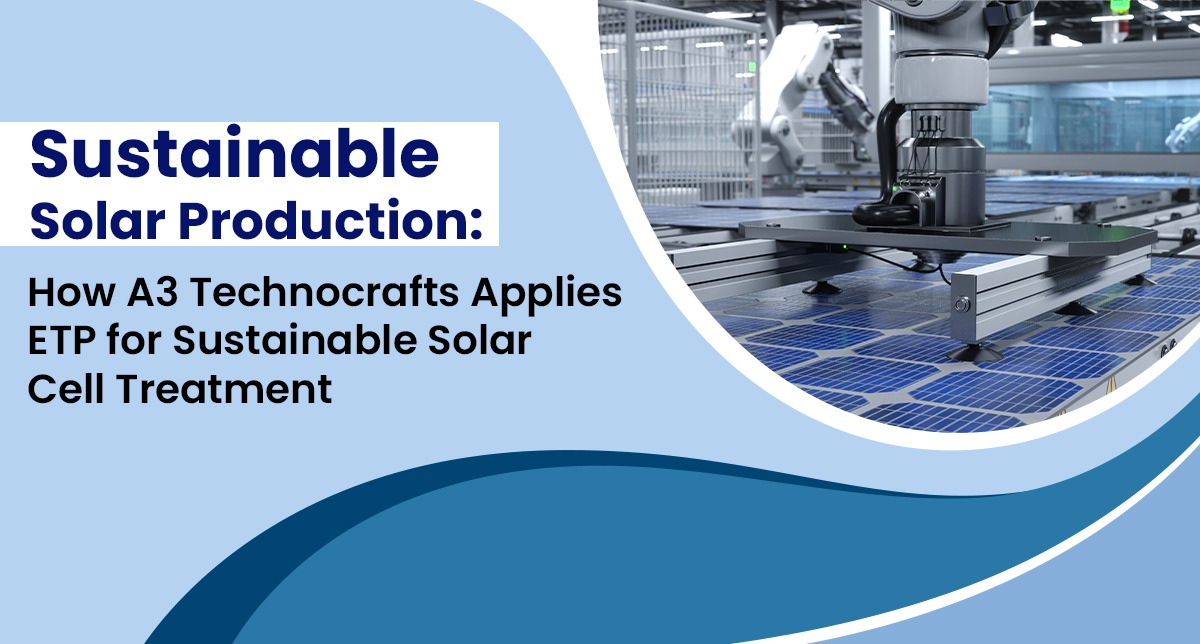
Introduction
With the world moving toward renewable energy, solar power has emerged as a pillar of sustainable development. In making solar cells, though, there are chemicals and water-based processes that can create hazardous wastewater. If these effluents are not treated, they have the potential to cause harm to the environment and compromise the very sustainability of solar energy.
To pass this test, A3 Technocrafts‘ use of ETP in solar cell treatment ensures that not only is clean energy produced but also produced sustainably. Their approach ensures that innovation supports sustainability, and they are substantiated as a green technology leader.
Why Solar Cell Production Requires ETP
The production of solar cell uses chemicals like etching, washing, and coating. Chemicals like acids, alkalis and solvents that produce wastewater with toxic residues are used in this process. Release of these effluents in untreated form can be harmful for environment.
This is the process where ETP by A3 Technocrafts steps in. An Effluent Treatment Plant processes industrial wastewater, removes toxic chemicals, and facilitates recycling or safe disposal of water. For solar cell production, this provides expansion in clean energy without costing the environment.
A3 Technocrafts’ Approach to ETP
The use of ETP by A3 Technocrafts shows their commitment towards green solar cell treatment. Their policy is founded on:
- Zero-Liquid Discharge (ZLD): Ensuring that no untreated wastewater is discharged outside the plant.
- Recycling Treated Water: the treated water can be reused in plant and minimizing freshwater intake.
- Compliance with Standards: Surpassing the environmental standards set by international organization.
- Advanced Treatment Methods: Utilizing physical, chemical, and biological treatment for maximum efficiency.
Through the incorporation of these practices, A3 Technocrafts makes solar cell manufacturing both efficient and eco-friendly.
How use ETP in Solar Cell Treatment is beneficial
- Environmental Protection: Protects the water bodies and land from degradation.
- Resource Efficiency: The use of recycling water and reducing freshwater usage.
- Regulatory Compliance: It complies regulation with pollution board norms.
- Sustainability Branding: Enhances the green image of manufacturers.
A3 Technocrafts’ adoption of ETP offers these benefits along with increased trust among stakeholders in the renewable energy industry.
A3 Technocrafts and Green Innovation
A3 Technocrafts’ implementation of ETP is a way of looking at the objective of sustainability through solar technology. also an extension of their wider objective to adopt sustainable solar technology practices. A3 Technocrafts aligns its policy with the International ESG standards to maintain the green innovation in manufacturing of solar cell.
Final Thoughts
The solar industry lead the way with sustainability. By embracing ETP solutions by A3 Technocrafts in the treatment of solar cells, manufacturers can ensure clean energy production is not damaging the environment. They are the flag bearers of responsible solar technology through green manufacturing.
Searching for sustainable and innovative solar manufacturing solutions? Explore A3 Technocrafts to create a greener future today!
FAQs
1. What is ETP’s Role in Solar Cell Treatment?
ETP treats solar manufacturing chemical wastewater, which is then safe for reuse or disposal.
2. Why does ETP matter to the solar industry?
ETP promotes green production and stops toxic effluents from degrading the environment.
3. How A3 Technocrafts employ ETP?
ETP by A3 Technocrafts provides zero-liquid discharge and effective water recycling for solar treatment.
4. Does ETP contribute to sustainability objectives?
Yes, it is regulates with ESG norms and renewable energy vision of India.