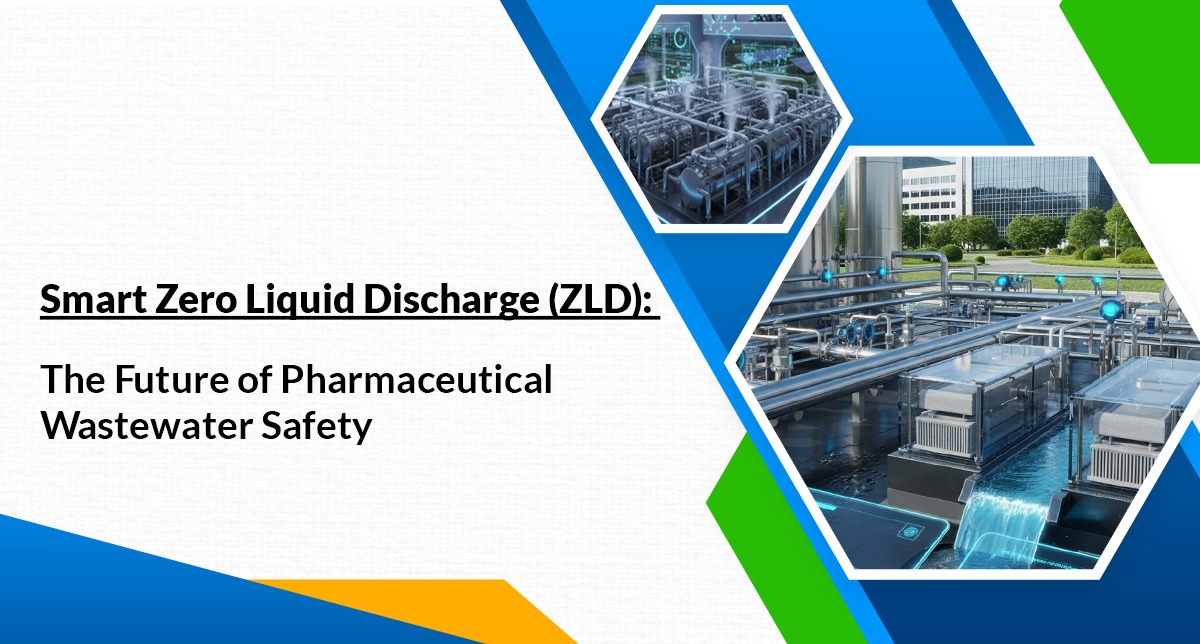
Smart Zero Liquid Discharge (ZLD): The Future of Pharmaceutical Wastewater Safety

Pharmaceuticals are that sector of society which help to heal the world, but their manufacturing process that saves lives creates wastewater that needs to be handled with due diligence. If not given due attention, pharmaceuticals, solvents, and chemicals can end up in rivers and impact public health. The sector of society that heals lives cannot be left responsible for wastewater mismanagement affecting public health. Many industries are now adopting zero liquid discharge plants. Our zero liquid discharge Plants aim to recover every drop of usable water from waste. It also helps prevent harmful wastewater from polluting the environment.

At A3 Technocrafts, one of the leading wastewater treatment company in Delhi, we partner with pharma companies to help turn their wastewater into a recovered asset. Our modern zero liquid discharge plants recover more water, provide stronger environmental protection, and meet all requirements for compliance with Indian compliance removing the worrying waste to keep businesses growing responsibly and preserve our water bodies for the future.

Why ZLD (Zero Discharge Plant) Matters in Pharma Units

Pharmaceutical wastewater is not like normal industrial waste. It contains complex and harmful substances that require specialised treatment. Our zero discharge plant makes sure no liquid waste is discharged outside the facility.

This helps in:

Protecting rivers and groundwater.

Reducing water dependency and shortages.

Meeting strict CPCB and pollution board guidelines.

Cutting operational risks during audits.

How ZLD Works — Simple and Smart

Our industrial wastewater management specialists design systems that:

Treat wastewater to remove chemicals.

Separate useful water from sludge.

Recover up to 95% of reusable water

Convert the remaining waste into dry solids.

    So instead of pollution, pharma plants get clean water that can be reused in utilities and production.

    Cost-Efficient, Not Costly

    Many believe installing a zero liquid discharge plant is expensive. But the truth is water recycling reduces the need to buy fresh water daily. It also cuts the long-term burden of waste disposal charges.

    When you consider savings over time, a Zero Liquid Discharge Plant becomes a financially smart move for every pharma company.

    Designed for Pharma Needs

    Our solutions stand apart because we customize every system based on:

    Production capacity

    Chemical load

    Space constraints

    Future expansion plans

    Being one of the leading effluent treatment plant manufacturers in India, we combine technology with practicality to deliver results that last.

    Sustainability with Safety

    Pharma companies today aim for ESG goals. Zero liquid discharge helps improve:

    Brand reputation

    Environmental performance

    Worker and community health

    Building a Sustainable Pharma Future With A3 Technocrafts

    The shift toward sustainability in the pharmaceutical industry is no longer a formality but it is a responsibility.

    It’s essential for the pharmaceutical sector to. Invest in a Zero Liquid Discharge (ZLD) system helps companies cut down pollution, protect future water resources, and improve operational efficiency all at once. For every drop recovered and risk reduced, A3, one of the leading waste water treatment company in Delhi, provides a zero discharge plant. Our plant clears a pathway for pharma companies driven by compliance to remain compliant; proactive to remain competitive; responsible to remain sustainable.

    A3 Technocrafts, one of the leading wastewater companies, is committed to leading this initiative. From the consulting phase to end-to-end implementation and ongoing maintenance, our team of highly concerned specialists will manage your project to ensure worry-free performance over the entire system lifecycle.

    If you want a reliable wastewater treatment system company, A3 Technocrafts is here to support your growth with safe, efficient, and future-ready solutions.

    FAQs

    Q1: Why should pharmaceutical plants adopt ZLD?

    ZLD prevents harmful discharge, supports compliance, and saves water by recycling it for reuse.

    Q2: How long does installation take?

    It depends on plant size and inflow quality. We create a plan that avoids production delays.

    Q3: Does ZLD remove API contamination?

    Yes. Our technology is designed to treat pharma pollutants and ensure safe, reusable water.
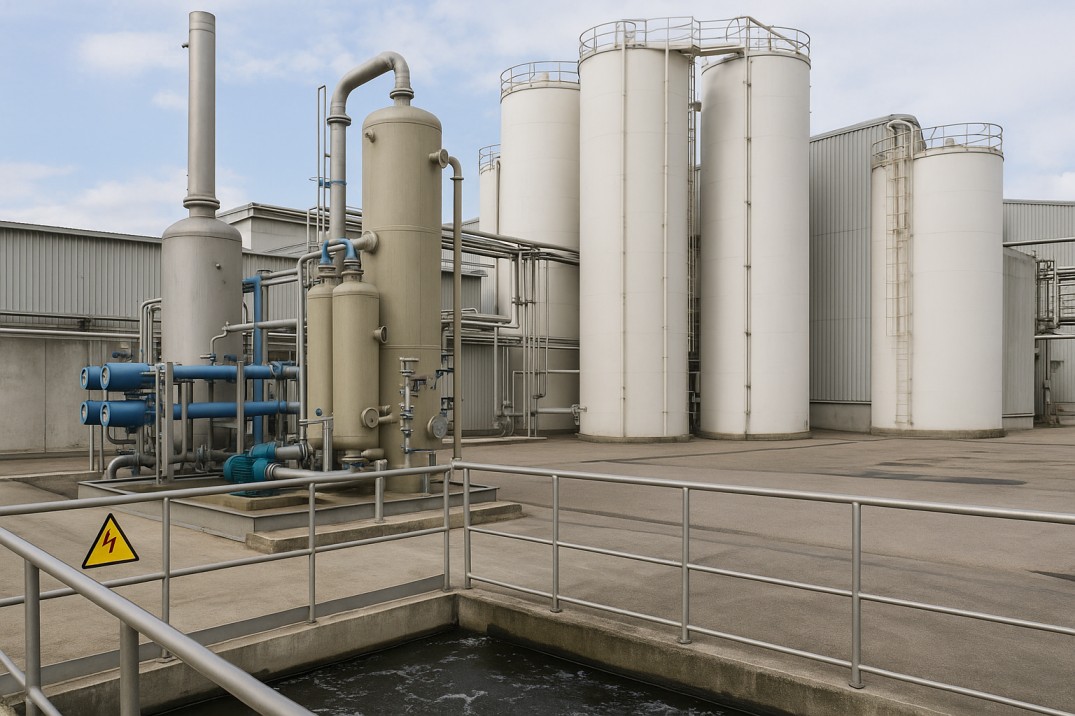
    How A3 Technocraft’s ZLD Systems Are Enabling Water Sustainability in Food Processing Units

    “Imagine if every drop of wastewater could be brought back to life — pure, clean, and ready to use again. Feels unreal, doesn’t it?”

    That’s exactly what A3 Technocrafts, a leading wastewater treatment company in Delhi, is making possible through its advanced Zero Liquid Discharge Plants in Delhi. A3 technology is a leading company based in New Delhi, India.

    Giving Wastewater A Second Life!!

    Food processing units use a lot of water daily — for cleaning, cooking, and cooling. But most of it all goes to waste. A3 Technocrafts viewed this challenge as a chance to build a smarter, greener system. And become one of the pioneers in this sector.

    Our Zero Liquid Discharge Plants ensure that no water leaves the facility as waste. They filter, treat, and reuse every drop. For industries, this means lower water bills. It also means less need for fresh water and no discharge into the environment.

    A3 Technocrafts has years of experience in wastewater treatment. We help industries create a sustainable future while saving money.

    How The ZLD System Works

    ZLD stands for Zero liquid discharge.

    A3’s ZLD Plants are simple but powerful. Wastewater goes through several stages — filtration, evaporation, and purification. At the end, clean water is returned for reuse in production, while solid waste is safely disposed of.

    This process helps manage industrial wastewater. It works well for the food, beverage, and hotel industries. It combines Effluent Treatment Plants, biological wastewater treatment plants, and modern technology to deliver lasting results.

    Green Today, Gains Tomorrow

    For food factories and hotels, clean and safe water is essential. A3 Technocrafts builds sewage treatment plants and effluent treatment plants manufacturers in India that recycle wastewater to maintain hygiene and reduce costs.

    Even hotels and restaurants trust A3’s sewage treatment plant for hotels — it saves water for gardening, cleaning, and cooling, while cutting the sewage water treatment plant cost.

    As one of the most trusted sewer treatment plant companies in Delhi, A3 offers complete solutions from design to installation — making it easy for industries to go sustainable without breaking budgets.

    Why to choose A3 Technocrafts?

    Because A3 technocraft doesn’t just sell systems — it builds trust. Every plant is designed to perform efficiently, meet government standards, and reduce operational expenses. As top sewage water treatment plant manufacturers in Delhi, we ensure reliable performance, long life, and strong after-sales service.

    Our zero liquid discharge plants are proof that sustainability can also be smart business. With A3 Technocrafts, industries save water, money, and the planet — all at once.

    Building a Greener Tomorrow

    At A3 Technocrafts, Where innovation meets responsibility. Our systems are designed in such a way that it helps industries recycle, reuse, and rethink water consumption. As one of the leading effluent treatment plant manufacturers in India, We are shaping a future where every drop counts.

    When it comes to clean water and clean conscience — A3 Technocrafts leads the way.

    FAQs

    Q1. Why should food industries choose A3’s ZLD systems?

     A3 technocrafts help reuse wastewater, cut costs, and meet sustainability standards.

    Q2. Are these systems suitable for hotels and restaurants?

    Yes. A3’s sewage treatment plant for hotels ensures safe water reuse and hygiene.

    Q3. Do ZLD systems reduce maintenance costs?

    Absolutely! A3 Technocrafts’ Effluent Treatment Plants are designed for long life and minimal upkeep. That means less hassle, fewer interruptions, and more savings for your business.

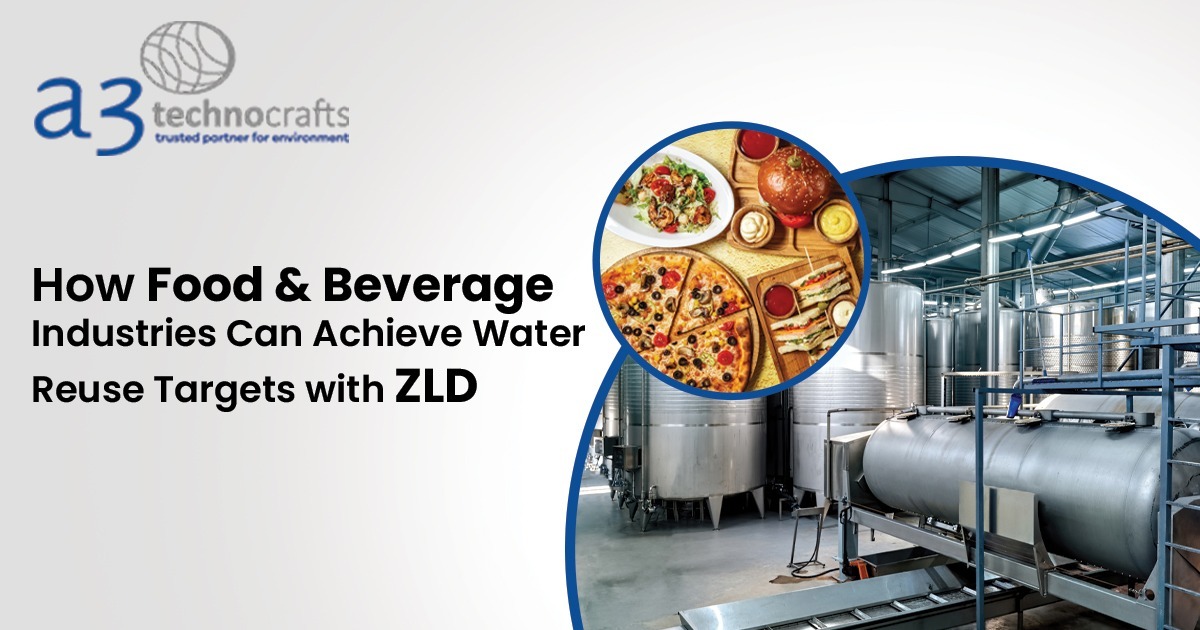
    How Food & Beverage Industries Can Achieve Water Reuse Targets with ZLD

    A Deep Dive into Sustainable Water Management with A3 Technocrafts

    The most important player for the Food and Beverage industry is water, without it nothing is possible. Its use begins from cleaning of raw materials to mixing of ingredients and steam generation, washing of utensils and sanitation is all done by water. Nearly half of every production depends on cleaning and process-grade water. However, this dependence comes with a critical challenge: the generation of large volumes of wastewater that must be managed both responsibly and efficiently.

    With tightening regulatory norms, rising water costs, and increasing sustainability expectations from consumers and stakeholders, industries must move beyond basic effluent treatment. The demand of the growing times is a tough and powerful closed-loop water management strategy and that’s where Zero Liquid Discharge (ZLD) steps in.

    Understanding the Water Challenge in the F&B Sector

    In India alone, the food processing industry consumes approximately 300-400 million cubic meters of water annually, and generates high-COD and BOD wastewater containing sugars, fats, organic solids, and cleaning chemicals.

    Legacy ETP (Effluent Treatment Plant) plants treat the water sufficiently to comply with discharge requirements but do not allow for reuse. This leads to significant water withdrawal from aquifers, enhanced enforcement pressure from local pollution control boards, missed opportunities for water recovery and reuse, and escalating environmental and brand sustainability hazards.

    With Zero Liquid Discharge, industries are, however, able to recover more than 90% of their wastewater, thus significantly cutting consumption and discharge.

    What is ZLD & How Does It Work?

    Zero Liquid Discharge (ZLD) is a high-efficiency water treatment process that aims to recover all usable water from industrial effluents and leave behind solid waste only. A typical ZLD system comprises:

    Pre-treatment: Removal of suspended solids, oil & grease, and heavy organics using chemical and physical treatment.

    Membrane Filtration: Ultrafiltration and Reverse Osmosis (RO) systems remove dissolved impurities and concentrate the waste stream.

    Thermal Evaporation: Multiple Effect Evaporators (MEE) reduce the volume of RO rejection.

    Crystallization/Sludge Drying: Final stage where salts and solids are crystallized and removed for safe disposal.

    Water Recovery: Permeate (clean water) is collected and reused for non-potable applications like cooling, cleaning, boiler feed, and flushing.

    This process ensures that zero liquid is discharged into the environment, meeting the most stringent environmental norms and supporting a circular water economy.

    Why ZLD is Ideal for the Food & Beverage Industry

    The Food & Beverage industry comes up with new extravagant challenges like variable pH, high BOD, oil and grease, suspended solids, and frequent CIP (Clean-In-Place) washouts. ZLD systems are particularly suited for handling such effluents due to the following benefits:

    Regulatory Compliance

    With CPCB and SPCBs tightening norms — particularly in water-stressed areas — ZLD ensures total compliance with discharge limits and eliminates the need for discharge permissions.

    Water Reuse and Cost Savings

    Recycled water can be reused in CIP wash water, Cooling towers, Boiler feed water, Utility cleaning. This helps in reducing the use of extra freshwater by 60-90%, which leads to reduction in water bills and improving the sustainability solution for the long run.

    Lower Risk of Production Disruption

    Pollution Control Board regulates the industries and defaulting parties usually face shut-down notices. A ZLD system makes operations run smoothly without interrupting the environment.

    ESG and Brand Image Improvement

    Brands demonstrating water positivity and sustainability build consumer confidence, enhance ESG scores, and appeal to environmentally conscious investors.

    Sludge Volume Minimization

    Higher drying and crystallization decrease waste volume, and disposal is easier and less expensive.

    Why Choose A3 Technocrafts?

    A3 Technocrafts possess experience in end-to-end wastewater and ZLD solutions such as Turnkey design and installation of ZLD plants, Energy-efficient evaporators and membrane configurations, Customized automation for real-time monitoring, Compact, modular solutions for space-limited units, and Post-installation support and operator training.

    Our solutions are specially designed to the specific wastewater profile of each F&B unit, ensuring high uptime, low operating cost, and maximum water reuse.

    Final Thoughts: ZLD is Not a Luxury—It’s a Necessity

    The Food & Beverage industry must align to the alarming situations of climate change, water scarcity and environmental crisis. Zero Liquid Discharge is no longer a future choice—it is today’s requirement. Zero Liquid Discharge helps you in achieving the water recycling goals not only delivers compliance and cost-effectiveness but also establishes a reputation for responsibility and sustainability.

    Your journey in achieving these objectives is done smoothly, efficiently, and supported by established know-how, with A3 Technocrafts.

    Interested in applying ZLD to your food or beverage plant?

    Call A3 Technocrafts today for a free consultation and site visit.

    The Future of Zero Liquid Discharge Method for Water Management at Industrial Site

    Over the past years, the recovery, recycling and reuse of wastewater has become a major trend as well as an inescapable need globally. Amidst the steadily increasing environmental concerns, scarcity of freshwater and stringent regulations, industries are in constant search of the best method of wastewater treatment. Though Zero Liquid Discharge (ZLD) methods have been in use at industrial sites for quite some time now, there have been multiple challenges. 

    Challenges for ZLD at industrial sites

    1. The conventional methods of ZLD using thermal evaporators, (though effective) are a challenge in terms of the economic and energy aspect. This method is highly energy consuming and requires huge capital investment. 

    2. Innovative and customized ZLD solutions for different types of industries developing effective high recovery systems capturing different types of effluent composition has been a challenge.

    3. Ideal operating conditions for ZLD, including temperature, pressure, scaling, and susceptibility to foul need close monitoring.

    4. Choosing the right kind of evaporator effects for a system with several effects is a challenge.

    5. Effluent characteristics along with related corrosion and temperature issues and challenges of material compatibility have been leading to high operating costs for ZLD treatments. 

    What the future holds for Zero Liquid Discharge?

    New developments and innovations in the ZLD methods are not only promising solutions for industrial sites like textile, pharmaceuticals, electronics and minerals etc. but also becoming a global favourite for industrial water treatment. The emerging membrane-based ZLD technology has been cutting the cost as well as beating the energy requirement resulting in effective treatment of Condensate Polishing Unit

    #1. To minimise the price of ZLD systems, more dependable, higher recovery MLD (Minimal Liquid Discharge) processes must be achieved first, which requires advanced RO (Reverse Osmosis) elements designed to handle difficult brine fluids.

    #2. After the RO step, three membrane based processes namely, ED (Electrodialysis), FO (Forward Osmosis), and MD (Membrane Distillation) have proved to be effective alternative ZLD technologies to brine concentrators for further concentration. These procedures generate brine, which is used as a feed for the crystallizer or evaporation pond.

    Analysis of the benefits, drawbacks, and energy requirements of these processes show that the final result is perfect for regulatory compliances and hence outweighs the economic constraints. These technologies are advanced methods that combine heat and membrane based techniques in some cases, such as thermolytic FO and MD. Although heat energy is used in these processes, the main separating elements of these technologies are membranes.

    Zero Liquid Discharge Plant Technology

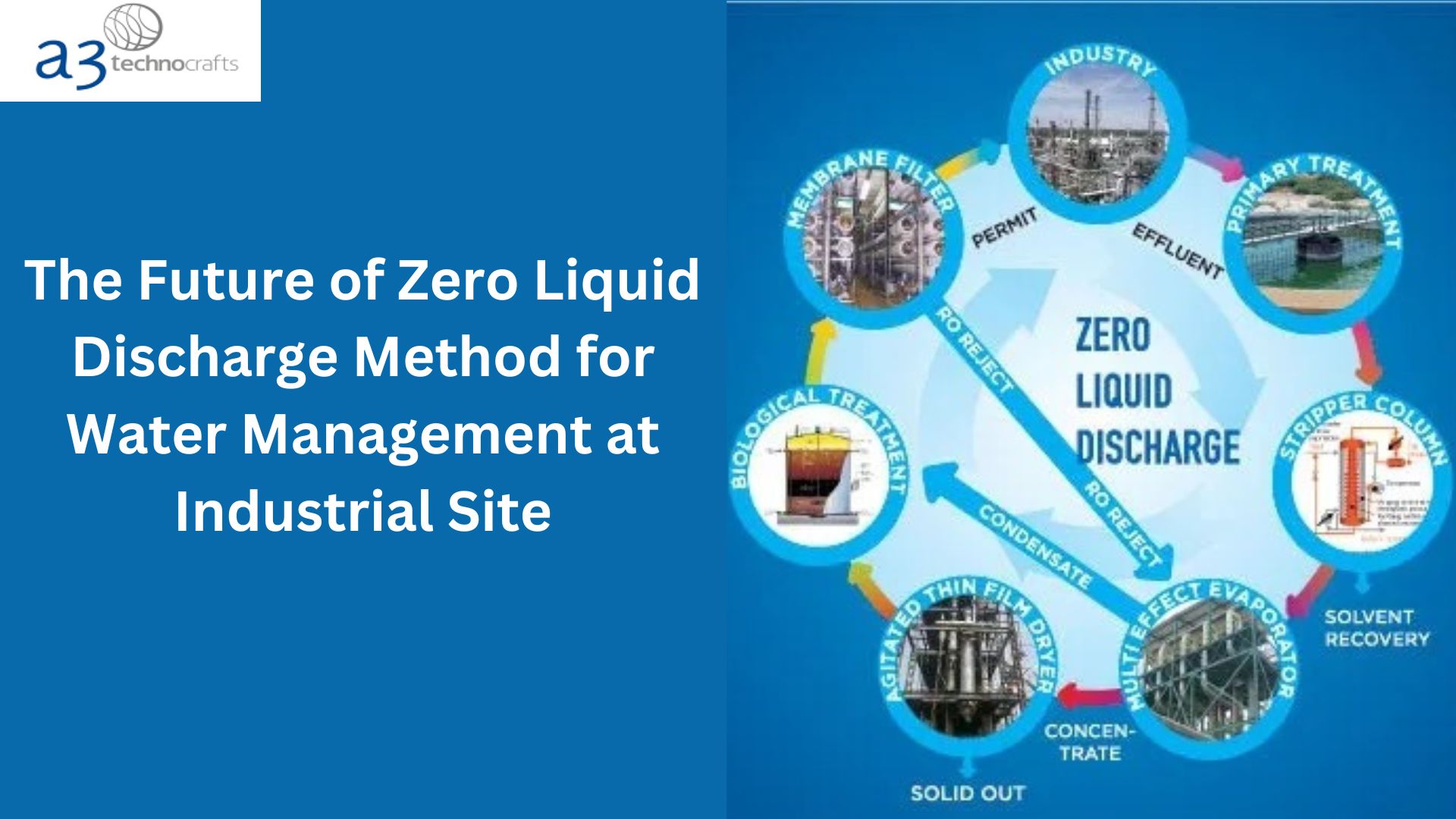
    Zero liquid discharge (ZLD) technology typically involves a combination of several treatment processes, depending on the composition of the wastewater and the desired level of treatment. Here are some of the common steps involved in a ZLD plant:

    1. Pre-treatment: In this step, the wastewater is screened and pre-treated to remove large solids and debris, and to adjust the pH and temperature of the wastewater to optimize subsequent treatment processes.

    2. Reverse osmosis (RO): The wastewater is then treated using an RO system, which uses a semi-permeable membrane to remove dissolved solids, organic compounds, and other contaminants from the water. The permeate, or treated water, is then collected and sent for further treatment or reuse.

    3. Brine concentration: The concentrate, or brine, that is left behind from the RO process is then sent to a brine concentrator, where the water is evaporated and the remaining salts and solids are concentrated and separated.

    4.Crystallization: The concentrated brine is then sent to a crystallizer, where the remaining salts and solids are further concentrated and crystallized, producing a solid waste stream.

    5. Solids dewatering: The solid waste stream is then sent to a dewatering system, such as a filter press or centrifuge, to remove any remaining moisture and produce dry solid waste that can be disposed of.

    From the environmental sustainability point of view and compliance requirements for industrial sites, Zero Liquid Discharge Plant is one of the best methods to adopt. ZLD has a tremendous deal of potential to reduce water pollution and increase water supply, but its practicality depends on striking a balance between the advantages of ZLD, energy consumption, and initial as well as operating expenses. To get the best out of this amazing innovation, the best technologist needs to be in charge to ensure appropriate installation and proper management. A3 Techno Crafts is a leading technologist working with various site based customised ZLD plants across industries. Technologists like A3 Techno Crafts, perform accurate analysis of the generated effluents and other crucial factors for a particular site and find the best possible solution. Both energy consumption and costs are minimised with proper research before installation combined with the use of methods equipped with advanced innovations.

    Understanding Zero Liquid Discharge (ZLD) Plant and its functions

    Zero Liquid Discharge (ZLD) as the name suggests is a process designed to achieve zero liquid status in the waste generated or a method to eliminate waste liquid completely. Main driving force behind this is to minimize water wastage and maximize its usage through recycling. This proves beneficial for the environment and economy by saving gallons of Zero Liquid Discharge Plant.

    Industrial wastewater contains a lot of harmful biodegradable or non-biodegradable substances which are unfit to be discharged into water bodies. Harmful effluents and discharges from the industries are threatening the environment. We all know water is very scarce in many parts of the world. Saving water is a growing concern for which various measures like regulating the way water is used have been taken around the world. ZLD uses advanced technologies in water treatment plants to purify wastewater.

    Design of a Zero Liquid Discharge Plant (ZLD) plant

    ZLD plant is designed and customized according to the site where it is needed. It is mostly needed for industries which depend a lot on water for their operation and process. There are various factors that needed to be thought of before a ZLD can be installed. The byproducts of ZLD operation are liquid and solids, out of which water is used again for various processes and the solid part is discarded in landfill or treated further to extract chemicals if possible.

    Government regulations these days have made it mandatory for different industries like textiles, chemicals and beverage industry to have ZLD installed so as to reduce Waste water treatment. Water recovery is the most important function of a ZLD plant. It is important to have a reliable ZLD plant to adhere to strict norms of regulations set by the government.

    The ZLD processing plant constitutes physicochemical treatment, biological treatment, membrane filtration and evaporation concentration. A well designed ZLD plant handles variable volumes and speed of discharge, delivers solid waste for disposal and recovers more than 90% of liquid for further usage. Although a bit costly, it goes a long way in managing water resources wisely.

    A3 is a leading system integrator offering engineering solutions for wastewater treatments. We provide customized, reliable and efficient solutions for ZLD to help you meet your corporate responsibilities. We understand your needs and come up with best possible solutions that suit your industry type. Minimize water wastage and optimize water to its maximum potential with effective ZLD plants from A3 Technocrafts.